My advice: choose work that fits your budget, physical limits, and time at home - not just your driving skills. Before leaving trucking, test demand part-time and keep 2–3 months of business expenses separate from your launch funds and household money.
I’d sort these 12 options into three groups:
- Office and home-based work: Mailbox and mail-handling service, bookkeeping, and online resale.
- Hands-on local services: Mobile auto detailing, pressure washing, lawn care and yard maintenance, handyman services, commercial cleaning, and junk removal.
- Equipment and property businesses: Vending machines, equipment rental, and self-storage.
Quick Comparison
| Business | Startup cost* | Physical workload | Typical schedule |
|---|---|---|---|
| Mailbox service | Mid | Low | Business hours |
| Mobile detailing | Low–mid | High | Appointments |
| Pressure washing | Low–mid | High | Appointments |
| Lawn care | Low–mid | High | Seasonal routes |
| Handyman services | Low | High | Appointments |
| Commercial cleaning | Low–mid | Moderate | Often after hours |
| Vending machines | Low–high | Moderate | Restocking and repairs |
| Equipment rental | High | Moderate | Business hours and maintenance |
| Self-storage | High | Low–high, depending on tasks | Customer service and property upkeep |
| Junk removal | Mid | High | Scheduled pickups |
| Bookkeeping | Low | Low | Flexible, with firm deadlines |
| Online resale | Low–mid | Moderate | Packing, shipping, and returns |
Cost bands are relative estimates, not price quotes.
I’d compare each option’s customers, equipment, training, permits, insurance, and staffing needs before spending. Then I’d track paid demand, total hours, and cash left after expenses. <u>Less time on the road does not always mean less work.</u>
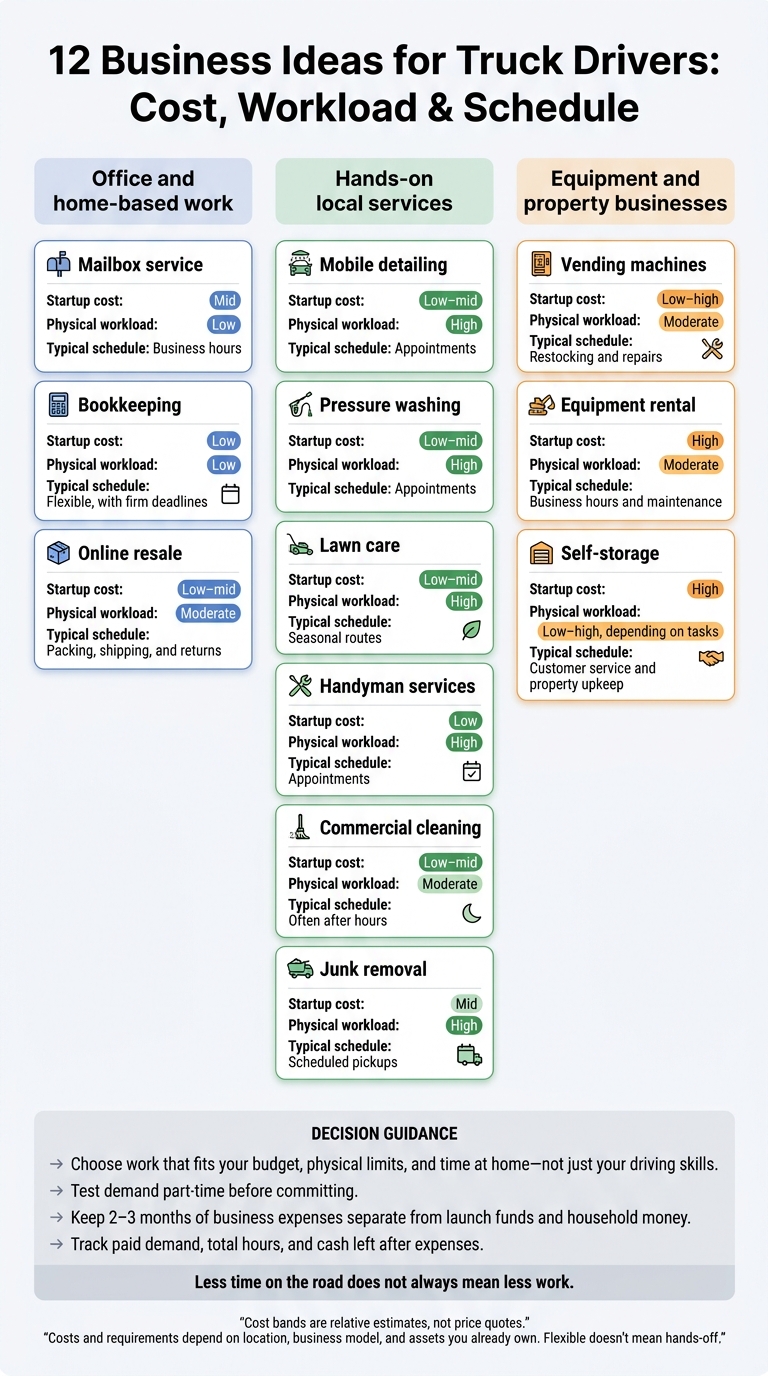
12 Business Ideas for Truck Drivers: Cost, Workload & Schedule
What to Plan Before Leaving the Road
Budget for the business you’ll actually run. Startup costs, permits, insurance, and workload depend on your location, business model, and the assets you already own. Start by listing what you have, then get current quotes for what you need. Use U.S. dollars throughout your budget, and treat low, moderate, and high cost bands as planning estimates - not guaranteed prices.
Include equipment, supplies, licenses, insurance, professional services, inventory, labor, and marketing. Separate one-time launch costs from recurring expenses. Equipment, business formation, and permit filings belong in your launch budget. Insurance, maintenance, wages, and software belong in your recurring budget. Account for deposits, too.
Keep working capital separate from startup funds. Set aside enough cash to cover 2–3 months of operating expenses, including payroll if you plan to hire help. Leave room for repairs, insurance deductibles, and slow sales. Use separate business and personal bank accounts, and budget household expenses outside your business reserve.
Before accepting customers, check federal, state, county, and city requirements. Confirm which tax registrations, business licenses, zoning rules, and service-specific permits apply. Check whether you need an IRS Employer Identification Number (EIN), and ask an insurance agent which coverage fits your activities, property, and vehicle use.
Before giving up trucking income, map out a typical workweek. Include unpaid time spent traveling, preparing quotes, making purchases, handling maintenance, and doing paperwork. Compare that schedule with your physical limits and household needs. Once the business is running, compare estimated costs with actual spending each month. That gives you time to adjust prices or cut spending before cash runs short. Use this checklist to judge which of the 12 ideas below fits your budget, time, and workload.
sbb-itb-f24084b
1. Mailbox and Mail-Handling Service
A mailbox and mail-handling service is an office-based option that many mobile businesses already need. It serves owner-operators, independent contractors, and small businesses looking for a stable mailing address and organized mail handling. Routing, recordkeeping, filing, and customer communication help keep client mail organized and secure.
Before opening, check the requirements for your location. These include USPS commercial mail receiving agency rules, local permits, and any required insurance or registration.
Plan how you’ll receive and sort mail, store it securely, and handle pickups and forwarding. Set fixed pickup hours so clients know when to stop by. Start by selling to local owner-operators and small businesses.
The next ideas shift from office-based services to hands-on local work.
2. Mobile Auto Detailing
Mobile detailing offers hands-on work for owner-operators and small fleets. Your inspection habits help you notice details customers care about, and your routing skills help you plan appointments. Working with fleet managers and drivers also builds customer-service skills you can use to set expectations and earn repeat business.
Book multi-vehicle stops to cut unpaid drive time. Start with fleet owners you already know, then group nearby appointments to spend less time traveling between jobs.
Before you commit, separate upfront costs - equipment, business formation, and insurance - from recurring expenses such as fuel, insurance, maintenance, and software. Check local business licensing, wastewater, and water-use rules before starting. Expect physical labor, on-site work, and little downtime between jobs.
This option suits people who want mobile, appointment-based work. The next ideas focus on property maintenance.
3. Pressure Washing
Pressure washing takes the same appointment-based service model into property maintenance. Your customers are homeowners, landlords, and property managers. Budget for a washer, hoses, chemicals, a trailer or vehicle mounts, and insurance. The equipment-care habits you already have apply to pumps, hoses, and engines, while local contacts can help you land repeat property-service contracts.
Price the whole job - not just your time on site. Include labor, fuel, chemicals, and overhead in every quote. Turn down jobs with low margins.
This is active work. Expect to stand, walk, handle hoses, and maintain equipment. Set a maintenance schedule to cut downtime, and check local rules for business licenses, wastewater, and chemical use before you start.
For a similar local service business with lighter equipment, the next idea is lawn care.
4. Lawn Care and Yard Maintenance
Lawn care offers similar local work with lighter equipment. Serve homeowners, landlords, and small properties with mowing, weed control, and leaf cleanup. Start with your existing contacts to reach homeowners and property managers. Use your route-planning and scheduling skills to group weekly or biweekly accounts. Recurring customers can bring steadier income than one-off jobs.
Startup costs range from low to moderate, depending on what equipment you already own. Budget for a mower, trimmer, fuel, trailer, and insurance, and track profit per job. Check local pesticide rules and any required lawn-care permits before taking on work.
Plan for outdoor labor, seasonal demand, and weather delays. Book heavy summer work early and leave room in your schedule for rain. Leaf cleanup can keep revenue coming in after mowing season ends.
5. Handyman Services
Help homeowners and landlords with small repairs and fixture installations. Your truck troubleshooting skills can help you diagnose minor property problems, and maintenance logs can support repeat work at rental properties. Tie startup spending to paid jobs: take stock of the tools you already own and rent specialty tools until you’re getting regular work.
Schedule repair calls, parts runs, and follow-up visits during your preferred hours. Choose jobs that fit your physical abilities, too. Before adding electrical or plumbing work, get training and check local limits on what you can do. These jobs often require permits or licensed tradespeople.
If you’d prefer steady accounts with less repair work, the next idea moves from fixing to cleaning.
6. Commercial Cleaning
Commercial cleaning suits drivers who want recurring accounts and predictable routes. You can serve warehouses, distribution centers, and terminals - places you already know. Your reliability and scheduling skills translate well to recurring contracts, while simple service records show clients that you completed the work. Your safety habits and attention to detail carry over, too.
Budget for vacuums, mops, chemicals, uniforms, and insurance, along with recurring supply and labor costs. Carry general liability insurance to cover property damage and injury claims. Before taking jobs, get training on cleaning chemicals and equipment. Put your safety habits to work when handling chemicals and wearing personal protective equipment (PPE).
Plan on hands-on, physical work, often alone, with early-morning or after-hours shifts on many accounts. If you’d prefer less labor and more routine upkeep, the next idea is vending machines.
7. Vending Machines
Vending gives you recurring stops with limited customer contact.
Start a snack and beverage vending route for workers, drivers, and shift crews at terminals and distribution centers. Budget for machines, inventory, and service supplies. Choose high-traffic locations, then use your trip-planning skills to group service stops close together. Before buying equipment, check local vending permits, food-safety rules, and site contract requirements.
Know your margins before you buy a machine. Calculate profit per machine, per item sold, and per stop. Run the route like a delivery schedule, with time for restocking, cleaning, cash collection, and repairs. This is a business you’ll need to work, not a hands-off asset. Once the route is stable, compare it with equipment rental, which also requires scheduling but less consumable inventory.
8. Equipment Rental
Equipment rental offers a route-based business with fewer consumables. It turns your trucking experience into an asset-based business.
Rent machines you already know how to operate - such as excavators, forklifts, or skid steers - to homeowners and contractors. Your inspection habits, dispatch discipline, and equipment care can help keep those machines ready to rent.
Plan for equipment costs and secure, weather-protected storage. When buying used equipment, budget $800–$1,200 for a pre-purchase inspection and about $10,000 in repair reserves per major machine.
Before opening, check local rental permits, tax registration, and any operator requirements. Make sure your insurance covers the equipment type, service area, and intended use.
Day-to-day work includes inspections, cleaning, scheduling, and repairs. Encourage customer pickup when possible to reduce delivery miles.
If you prefer a lower-traffic business built around storage, the next idea is self-storage.
9. Self-Storage
Self-storage shifts the focus from moving equipment to managing property. You own and manage a storage facility, serving homeowners, renters, contractors, and small businesses that need short- or long-term storage. Your trucking skills in recordkeeping, maintenance, and risk control carry over to tracking units, keeping the property in shape, and handling security. This is a business you run - not passive income.
A 36-unit facility can require about $1,000,000. Before buying or building, check local zoning, permit requirements, and state self-storage laws. Your budget needs to cover financing, insurance, and upkeep - not just the property price.
Expect to handle customer service, security checks, and maintenance. Track occupancy against fixed monthly expenses: empty units mean less revenue, while those bills still come due. If you prefer a lower-cost option built around hands-on work, the next idea is junk removal.
10. Junk Removal
Junk removal offers drivers local work with low overhead, serving homeowners, landlords, property managers, and contractors who need debris removed. You’ll use scheduling, customer service, and load securement skills to move mixed debris safely.
Price the full job before accepting it. Budget for a truck or trailer, securement gear, safety equipment, business registration, insurance deposits, fuel, and dump fees. Check trailer registration requirements and whether state and federal hauling rules apply.
Your day involves scheduling pickups, loading, hauling, dumping, cleanup, and driving empty between jobs. Group nearby jobs to cut unpaid miles. Confirm disposal and hazardous-waste restrictions before taking a job. If you hire help, include labor costs in your pricing.
For work with fewer physical demands, bookkeeping is the next option.
11. Bookkeeping
Put your fleet knowledge and recordkeeping experience to work by offering bookkeeping for owner-operators and fleets with 2–10 trucks. You’ll organize expenses, fuel card records, payroll, and maintenance reserves.
The main hurdle is learning the software - not buying equipment. Get comfortable with bookkeeping software before taking on clients, and budget for monthly software fees.
Day to day, you’ll check transactions, separate personal and business expenses, and track profit and loss for each truck. Calculate cost per mile using all miles driven, including deadhead miles.
This home-based work is less physically demanding, but payroll and quarterly IFTA filings come with firm deadlines. Build your skills while you’re still driving, and agree on exactly which records and reports each client expects. If you’d prefer fewer deadlines and less client accounting, the next idea shifts to online resale.
12. Online Resale Business
An online resale business lets you work from home and put your sourcing, pricing, and shipping skills to use. Sell truck-related parts, accessories, and supplies to drivers, owner-operators, and small fleets - customers whose needs you already know from driving. Your trucking knowledge can help you spot demand, while your scheduling and logistics experience can help you manage inventory, shipping, and order fulfillment.
Inventory is only part of the budget. Shipping, storage, platform fees, and unsold stock can cut into your margins. Before listing products, check sales-tax registration requirements, business license requirements, and platform seller rules. Home-based startup costs may include business formation fees, which vary by state. Plan for tax reporting, permit renewals, and other compliance requirements before you start.
Day-to-day work includes sourcing products, creating listings, packing and shipping orders, and handling returns. Track shipping, storage, and platform fees each month, and keep a cash reserve for slow sales.
Compare Costs, Workload, and Operating Requirements
Startup-cost bands are planning estimates - not fixed prices. Low, mid, and high describe relative investment. Your costs and requirements will depend on the activity, location, and business structure. Tools, vehicles, or property you already own can also change your starting budget.
| Business | Relative startup cost | Operation type | Physical workload | Schedule pattern | Main customers | Key equipment or asset | Major operating checks | Hiring potential |
|---|---|---|---|---|---|---|---|---|
| Mailbox service | Mid | Storefront | Low | Regular business hours | Individuals and businesses | Mail racks and point-of-sale system | USPS CMRA permit; zoning | Employees for counter service and mail handling |
| Mobile detailing | Low–mid | Mobile | High | By appointment | Car owners | Van, water tank, cleaning supplies | Wastewater runoff rules; insurance | Properly classified contractors |
| Pressure washing | Low–mid | Mobile | High | Flexible appointments | Homeowners and businesses | Pressure washer and trailer | Environmental rules; liability insurance | Properly classified contractors |
| Lawn care | Low–mid | Mobile | High | Seasonal, flexible | Homeowners | Mowers, truck, trailer | Local licensing; insurance | Properly classified contractors |
| Handyman services | Low | Mobile | High | Flexible appointments | Homeowners | Vehicle and power tools | Trade licensing and permitted work limits; insurance | Solo or properly classified contractors |
| Commercial cleaning | Low–mid | Client-site | Moderate | Often after business hours | Businesses | Industrial vacuums and floor buffers | Liability insurance; bonding requirements | Employees |
| Vending machines | Low–high | Property-based | Moderate | Flexible restocking visits | Customers at high-traffic sites | Machines and transport van | Sales tax; applicable health permits | Solo at first; employees as locations grow |
| Equipment rental | High | Property | Moderate | Business hours plus maintenance | Homeowners and businesses | Fleet (tractors, backhoes) | Zoning; specialized insurance | Employees |
| Self-storage | High | Property | Low for office work; higher for maintenance | Office hours plus access and maintenance needs | Households and businesses | Storage units and security systems | Zoning; property taxes | Solo or part-time employees |
| Junk removal | Mid | Mobile | High | Scheduled pickups | Households and businesses | Truck and loading equipment | Disposal permits; insurance | Employees |
| Bookkeeping | Low | Home-based | Low | Flexible, deadline-driven | Small businesses | Computer and software | Tax and certification requirements | Solo or properly classified contractors |
| Online resale | Low–mid | Home-based | Moderate | Flexible fulfillment schedule | Individual buyers | Inventory, computer, shipping supplies | Sales-tax nexus | Primarily solo |
Flexible doesn’t mean hands-off. Vending machines need restocking, rental equipment needs maintenance, and storage properties need cleanup and repairs. Before buying machinery or property, budget for routine service and unexpected repairs. For a property-based business, check zoning, utility access, and equipment or trailer registration before committing funds.
Hiring can lighten your physical workload, but it also adds supervision and responsibility for running the business. The hiring column shows possible staffing models - not permission to call a worker a contractor. Check worker classification requirements before setting your labor budget.
Choose a Business That Fits Your Next Chapter
Keep launch capital separate from operating reserves. Don’t use household money or launch before the business can cover its own bills.
Choose work that fits your strongest skill and physical limits. That could mean a home-based, route-based, appointment-based, or property-based business.
Ask an insurance agent whether the new business model covers risks tied to your vehicle, property, labor, and equipment.
Test demand part-time before committing. Once you’ve narrowed your options, start with a focused service you can reliably deliver. Track paid bookings, hours worked, and expenses. Offer recurring service only when you can meet the schedule.
Base your decision on paid revenue, repeat demand, and cash left after expenses - not one strong week.
Use the next comparison table to weigh startup costs, workload, and operating requirements, then narrow your top choices before you commit.
Conclusion
Of the 12 options, choose the idea that fits your budget, skills, and timeline. Your trucking experience in logistics, routing, maintenance, and fleet management carries over to business ownership. Each option comes with different demands on your money, time, and labor - and offers a different level of flexibility. Before you spend, check local permits, zoning, and utility requirements.
Test one model long enough to understand demand, costs, and workload before expanding. Aim for a business that supports your life at home, and choose one you can run well - not just one that looks easy on paper.
FAQs
How do I know when I can afford to leave trucking?
You can afford to leave trucking when you have steady income from more than one source that doesn’t depend on your driving schedule. Your business or investments should bring in enough cash to meet your financial goals - whether that means becoming debt-free or paying off property - without depending on freight cycles.
Build those income sources while you’re still driving. Put your existing skills and contacts to work so you have a secure financial base before you leave.
How can I find my first customers outside trucking?
Put your existing skills and professional network to work. Look for local needs your new business can meet, then reach out to local managers or business owners to offer your services. Build your network before you need it, and use digital platforms to connect with potential customers.
Start with what you already know rather than learning everything from scratch. Before spending heavily on startup costs, confirm that people want your services.
How do I calculate my break-even point?
Separate fixed monthly costs - expenses you pay regardless of sales - from variable costs per job.
Break-even jobs per month = fixed costs ÷ (average price per job − variable cost per job).
For a revenue target, use break-even monthly revenue = fixed costs ÷ contribution margin rate. The contribution margin rate = (price − variable cost) ÷ price.
Keep a cash buffer: customer payments can arrive late, while expenses need to be paid right away.
